Casino Sites Accepting Credit Cards in Australia
 Available in AU
Understand the legal position, card checks, deposit costs and why casino withdrawals rarely return to the original credit card.

Table of Contents
- What Australian Players Need to Know Before Using a Credit Card
- How Credit Card Casino Deposits Work in Practice
- Visa and Mastercard Deposits, Limits and Account Checks
- Credit Card Deposit Costs and the Real Price of Speed
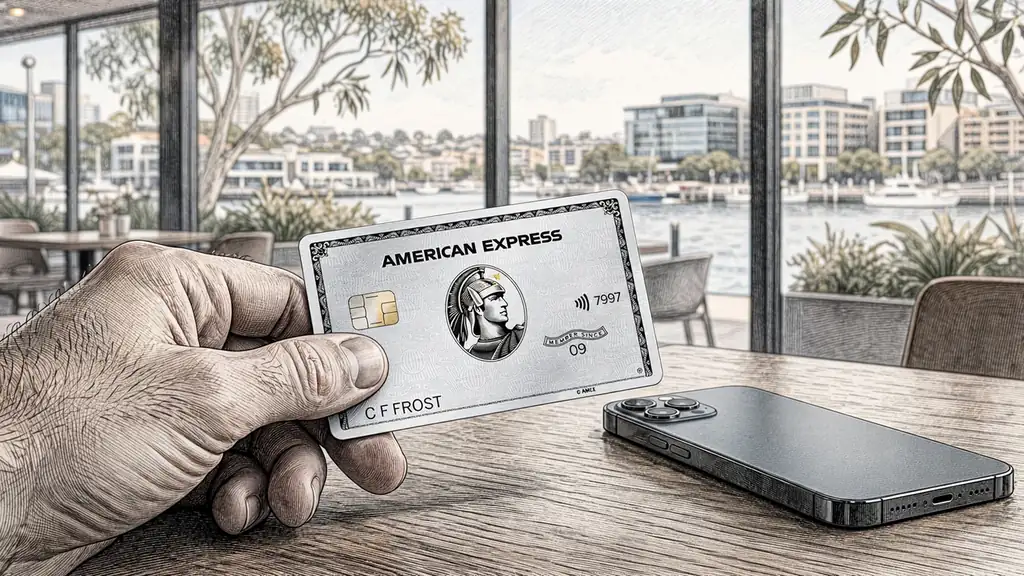
- American Express at Australian Online Casinos
- When a Casino Accepts a Credit Card but the Issuer Does Not
- Checking Whether a Casino Takes the Card Before Depositing
- Credit Card Play for Real Money: Deposits, Wagering and Withdrawal Eligibility
- Why Casino Cash-Outs Rarely Return to the Credit Card
- The Most Practical Credit Card Route for Australian Deposits
What Australian Players Need to Know Before Using a Credit Card
A credit card deposit is not the first condition to settle. The account must be eligible for gambling, the operator must be permitted to serve the market under its own legal framework, and the payment details must identify the same person who holds the casino account. A payment page displaying Visa, Mastercard or another card symbol does not remove those conditions.
The Australian legal position
Australia does not have one overarching gambling statute or a single gambling authority. Regulation operates at both federal and state or territory levels. The federal Interactive Gambling Act 2001 is the critical rule for online casino services: pokies, roulette, blackjack and live-dealer tables are prohibited interactive gambling services when offered to an Australian customer.
No Australian-licensed real-money online casino exists for Australian players. No Australian gambling licence exists for casino games because offering that product to Australians is against the law. This is different from online sports betting, which is legal when provided by operators licensed at state or territory level, and from lotteries, which are also licensed.
This shortlist highlights casino sites relevant to Australian players looking to use credit cards in 2026. Review each operator’s available bonuses, deposit requirements, licensing details and payout information before choosing where to play.
License: Curacao eGaming OGL/2024/923/0383 (Antillephone N.V.) · Bonus: up to A$2,000 + 100 free spins across 2 deposits · Min. deposit: A$30 WinSpirit Casino is licensed by Curacao eGaming under OGL/2024/923/0383, issued to Antillephone N.V. Its welcome offer includes up to A$2,000 and 100 free spins across two deposits, with a minimum deposit of A$30.
License: Curacao eGaming (Roby Games Ltd) · Bonus: 100% up to A$750 + 200 free spins Roby Casino operates under a Curacao eGaming licence held by Roby Games Ltd. It offers a 100% bonus up to A$750 plus 200 free spins.
License: Curacao eGaming Licence · Min. deposit: A$10 PlayCroco holds a Curacao eGaming licence and has a minimum deposit of A$10.
License: Curacao eGaming Licence · Min. deposit: A$10 Fair Go Casino operates under a Curacao eGaming licence. Its minimum deposit is A$10.
Bonus: 100% up to A$750 + 200 free spins, 35x wagering · Payout speed: crypto 30-120 minutes, fiat 24-72 hours · Min. deposit: A$30 MrPacho offers a 100% bonus up to A$750 plus 200 free spins, with 35x wagering. Crypto payouts are stated at 30–120 minutes, while fiat payouts take 24–72 hours; the minimum deposit is A$30.
License: Curacao · Bonus: up to A$10,000 multi-stage + 500 free spins · Min. deposit: A$20 (POLi) Lucky Dreams is licensed in Curacao and features a multi-stage bonus of up to A$10,000 with 500 free spins. The minimum deposit is A$20 when using POLi.
License: Curacao eGaming (Hollycorn N.V., since 2017) · Bonus: 225% up to A$1,540 + 600 free spins across 4 deposits, 20x wagering · Min. deposit: A$20-30 (depends on the offer) Playfina Casino operates under Curacao eGaming through Hollycorn N.V., which has held the licence since 2017. Its offer reaches 225% up to A$1,540 plus 600 free spins across four deposits, with 20x wagering and a minimum deposit of A$20–30 depending on the offer.
License: Curacao eGaming (Dama N.V.) · Bonus: up to A$10,000 + 180 free spins, 40x wagering JeetCity Casino is licensed by Curacao eGaming through Dama N.V. Its bonus package offers up to A$10,000 and 180 free spins, with 40x wagering.
License: Curacao Gaming Control Board OGL/2023/176/0095 (Hollycorn N.V.) · Bonus: 100% up to A$10,000 + 100 free spins GoldenCrown holds a Curacao Gaming Control Board licence, OGL/2023/176/0095, issued to Hollycorn N.V. Its bonus includes 100% up to A$10,000 plus 100 free spins.
Bonus: up to A$750 + 50 jackpot spins, 35x wagering · Payout speed: crypto ~90 minutes, fiat 1-5 days · Min. deposit: A$30 Kingmaker offers up to A$750 plus 50 jackpot spins, with 35x wagering. Crypto payouts are stated at around 90 minutes and fiat payouts at 1–5 days; the minimum deposit is A$30.
The Interactive Gambling Act targets the provider rather than the player. An Australian resident does not commit a crime merely by placing bets at an offshore site. That distinction matters, but it does not turn an offshore casino into a locally licensed business. Claims that a casino is “Australian licensed” for online casino games should therefore be treated as inaccurate.
ACMA publishes a register of Australian-licensed interactive wagering service providers. That register concerns licensed interactive wagering services, not a domestic register of online casino operators. There is no public Australian register of licensed online casino sites because no local casino licence of this kind exists. Offshore operators may instead hold licences from Malta or Curaçao; those authorities maintain public registers where a licence number and its status can be checked. Such a licence is offshore authorisation, not an Australian casino licence.
Age and identity are account conditions
Gambling in Australia is restricted to people aged 18 and over. Age is not a box to tick once and forget. It forms part of the operator’s identity and compliance checks, and a mismatch can prevent the account from being used or funds from being released.
KYC checks are mandatory at every Australian online casino, with no workaround. The operator may require identity documents before accepting unrestricted play, before processing a withdrawal, or when an account activity triggers a review. The exact timing can differ, but the obligation does not disappear because the initial deposit was made by card.

The account name, identification and payment method must point to the same person. The spelling on the AUD99 profile, the bank account and the ID should match. A credit card belonging to another person is not made acceptable by permission, family relationship or access to the card. The payment method must be in the same name as the casino account.
That requirement is also a practical fraud-control measure. Sharing login details or one-time passwords with anyone in chat, including alleged support staff, creates a separate security risk and does not satisfy KYC. A request to verify a card through a URL that was not opened from the official site is a stop signal. Payment credentials and verification codes should not be supplied through an unsolicited link.
What the card can and cannot establish
A successful card payment proves only that the transaction was authorised through the available payment route. It does not prove that the account has passed KYC, that the operator can legally offer casino games to an Australian resident, or that later account activity will be accepted without review.
The same principle applies to promotional funds. Bonus wagering requirements must be completed before withdrawal. A card-funded balance can therefore show as deposited while a bonus condition still restricts the amount eligible for cash-out. The deposit method and the bonus terms are separate account conditions; satisfying one does not satisfy the other.
Australian-issued Amex credit or charge products are banned at licensed wagering sites after June 2024, and Australian Amex issuers may have gambling blocks enabled by default on credit cards. Those issuer and product restrictions belong to the payment side, but they reinforce the central point: card acceptance is conditional, not a legal approval of the casino account.
Compliance First An offshore casino’s acceptance of credit cards does not mean the site is locally licensed or that your account is eligible for play.
For the same reason, a payment label such as “credit card accepted” should be read narrowly. It may describe a technical option displayed by an offshore operator, while account eligibility, identity matching, KYC and Australian regulatory restrictions remain unresolved. The sensible order is compliance first, card details second. A deposit made in the reverse order can leave money inside an account that has not been cleared for use or withdrawal.
How Credit Card Casino Deposits Work in Practice
A credit card deposit at an online casino is a short transaction chain: the casino presents the card option, the payment gateway requests authorisation, the card issuer approves or declines the charge, and the casino credits the account after confirmation. The balance becomes usable only after the casino receives that confirmation. Entering card details alone does not make the funds available.
The process starts with selecting a card method from the cashier. The payment page may list Visa, Mastercard or American Express separately, or may show one general card option with the supported brands disclosed after selection. This distinction matters because a casino can accept cards in general without accepting every card network. Visa and Mastercard have broad acceptance; American Express is supported by fewer casinos and is less widely accepted.
What happens after the card details are submitted
The payment gateway sends the transaction for authorisation. The issuer then checks whether the payment can proceed, while the gateway confirms the response to the casino. If approval is returned, the casino records the deposit and updates the playable balance. If the response is declined or the transaction fails to complete, the balance should not be treated as funded, even if the cashier page has displayed a pending message.
For Visa and Mastercard, deposits are widely accepted and are generally processed within seconds to minutes. That describes the payment transaction, not necessarily the time needed to complete any separate account review. A card charge can be authorised quickly while access to the deposited balance remains subject to a casino-side check. The practical point is therefore the moment at which the funds appear as available for wagering, rather than the moment the card form is submitted.

American Express follows the same basic sequence where the casino supports it, but acceptance is narrower. A casino may process Visa and Mastercard while excluding American Express from its cashier. The presence of a general “credit card” label is not sufficient evidence that an Amex card will work. The supported network must be confirmed at the payment stage.
Why acceptance differs between casinos
Card acceptance is determined by more than the fact that the payment is made with borrowed funds. It depends on the card network enabled by the casino, the payment gateway connected to the cashier and the issuer’s decision on the transaction. As a result, the same casino credit card may function at one operator and fail at another without any change to the physical card.
Visa and Mastercard are the practical baseline because their deposits are widely accepted across online casino cashiers. American Express has a smaller acceptance footprint. This is not a statement about the quality of the card; it is a compatibility issue between the casino, gateway and network. A list described as the “best credit card casinos” is therefore only useful if it states which card brands are actually accepted. A generic card logo is not a complete payment specification.
Widely accepted across most online casino cashiers with broad compatibility.
Supported by fewer casinos and often faces stricter acceptance or issuer blocks.
The payment currency can also be displayed before confirmation. For an AUD deposit, the cashier should show the amount and currency clearly before the transaction is authorised. The card issuer may apply its own conversion or account treatment where the charged currency differs, but the casino’s confirmation screen remains the reference point for the amount being submitted. A mismatch between the intended amount and the final confirmation is a reason to stop before authorisation, not a detail to reconcile afterwards.
When the deposit can be used
The deposit becomes usable when the casino credits the balance and presents the funds as available for play. A bank notification or card authorisation does not, by itself, establish that the casino has completed the credit. Conversely, a cashier showing a successful deposit should be checked against the account balance before any wagering begins.
For a Visa or Mastercard transaction, the available balance can appear within seconds to minutes because the deposit itself is generally processed in that period. American Express deposits can be equally immediate where supported, but the smaller acceptance base means that the first question is whether the card is enabled at all.
The usable-balance point also separates a completed deposit from a failed or interrupted payment. Repeating the transaction while the first attempt is still being confirmed can create duplicate authorisations. The account history and cashier status should therefore be read before submitting another card payment. Speed is valuable only when the status is unambiguous; otherwise it merely reduces the time available to notice the duplication.
A credit card online casino payment is thus not a cash transfer directly into a game. It is an authorised card transaction followed by casino crediting. Visa and Mastercard provide the broadest route and are generally credited within seconds to minutes. American Express can work just as quickly when listed, but fewer casinos accept it. The decisive operational test is the confirmed, usable balance shown by the casino after the payment response has been received.
Visa and Mastercard Deposits, Limits and Account Checks
Visa and Mastercard remain the most broadly supported card brands for an online casino with credit card payments. Where a casino accepts either network, a casino with credit card deposit facilities will generally show the card option at the cashier, request the card details, and send the transaction for authorisation. The practical difference is not normally the brand itself, but whether the specific card, issuer and account pass the operator’s checks.
Processing speed and usable balance
Visa and Mastercard deposits are widely accepted and are processed instantly, generally within seconds to minutes. “Instant” refers to the point at which the casino credits the transaction and makes the balance available for play, not necessarily the time required for every security review. A successful payment can therefore appear quickly, while an account selected for verification remains restricted until the review is complete.
The cashier may display a successful authorisation before the balance is fully usable. That distinction matters when a deposit is flagged for manual checking, when the account has incomplete identity information, or when the payment details do not match the player profile. The card network can approve the transaction while the casino separately withholds access pending its own controls. A fast card payment is not an exemption from account checks; it is only a fast funding route when no further review is triggered.
Limits are account-specific
A casino may present a minimum or maximum deposit amount for Visa and Mastercard, but those limits are not a fixed feature of the card networks. They can depend on the operator, the payment gateway, the account status and the card issuer’s transaction controls. The visible limit at the cashier is therefore the operative condition for that account at that time.
- Ensure the cardholder name matches your casino profile exactly.
- Verify the supported card networks in the cashier before depositing.
- Use a credit card belonging to another person.
- Assume a card logo guarantees every transaction will be approved.
Limits may also differ between a newly opened profile and an established, verified account. A deposit can be declined even when the requested amount appears inside the displayed range if the payment gateway applies a separate restriction or the issuer refuses the transaction. Conversely, a lower permitted amount does not indicate that the card is defective. It may simply reflect an account-level control.
This is why the phrase “pay casino with credit card” describes a payment route, not an unconditional entitlement to fund an account. Visa and Mastercard acceptance confirms that the method is available in principle. It does not remove the operator’s authority to limit, pause or reject a particular transaction.
Name matching and account consistency
The cardholder name must match the name registered on the casino account. The spelling on the AUD99 profile, the bank account and the identity document should match. A difference in initials, order of names or spelling can be enough to create a manual review, particularly where the operator needs to establish that the card belongs to the account holder.
The same consistency applies to the billing information and card data submitted during the deposit. Using another person’s Visa or Mastercard, even with permission, creates an ownership problem. The casino may request evidence of the cardholder’s identity or decline to credit the transaction. A card-funded balance cannot be treated as separate from the account that received it.
KYC checks are mandatory at every Australian online casino, with no workaround. This means a player seeking to play casino online with a credit card may be asked to complete identity verification before deposits remain available or before any later account action is approved. Verification is not replaced by a successful card authorisation.
What can delay access
Several conditions can interrupt the otherwise rapid path from card approval to playable balance:
- the account name does not match the Visa or Mastercard holder;
- identity information is incomplete or inconsistent;
- the operator requests additional KYC documents;
- the payment gateway places the transaction under review;
- the displayed account limit is exceeded;
- the issuer declines the transaction despite the casino listing the card brand.
The last situation belongs to the issuer rather than the cashier display: a casino can advertise Visa or Mastercard support while a particular bank still refuses the payment. That distinction prevents a common accounting error—treating the presence of a card logo as proof that every card transaction will settle.
Visa and Mastercard are also not the same as a guaranteed online casino withdrawal credit card route. Deposits may be instant, while withdrawals typically take one to five business days and may be rerouted to another method. The card therefore solves the funding stage more reliably than the cash-out stage.
Credit Card Deposit Costs and the Real Price of Speed
A fast credit card casino deposit has more than one possible cost. The amount shown on the casino cashier is only the starting point. The card issuer, payment gateway and casino may apply different conditions, and those conditions should not be treated as one combined fee.
Three Separate Cost Layers
The first layer is the card issuer. A bank or card company may classify a gambling transaction differently from an ordinary retail purchase. That classification can affect the account treatment, interest calculation or additional charges. The exact result depends on the issuer and the card agreement, so a casino’s statement that its own deposit process is free does not establish that the card transaction is cost-free.
Cost Layers Total transaction costs may involve the card issuer, the payment gateway, and potential currency conversion fees.
The second layer is the casino or payment gateway. A cashier may display a card option without adding a visible deposit fee, yet the gateway can apply its own conversion or processing conditions. An AUD deposit is therefore not assessed only by the headline amount. The amount credited to the casino balance and the amount appearing on the card account are the two figures that matter.
The third layer is currency conversion. If the casino balance is not handled in AUD, the card issuer may convert the transaction before it reaches the account. The exchange rate and any issuer-level conversion charge can change the final cost even when the casino advertises a fee-free deposit. A no-fee label is not a guarantee against a difference between the deposited amount and the card statement.
Why Reversals Matter
A reversed casino credit card deposit creates a separate accounting problem. The casino balance may be reduced before the card statement reflects the reversal, leaving the transaction temporarily unsettled from the player’s perspective. A duplicate authorisation or a failed credit can also make the available card balance look different from the final posted amount.

The practical rule is to distinguish an authorisation from a completed deposit. An authorisation reserves funds; it is not proof that the casino has credited the balance permanently. If the payment is declined, cancelled or reversed, the temporary hold and the final card entry may appear at different points. Treating the first notification as the final result is how a small payment becomes a bookkeeping exercise.
A reversed transaction should be matched against the casino cashier, the card statement and any gateway reference. The relevant question is not merely whether the money left the account, but whether the casino balance was credited and whether that credit remained available. This is especially important when a deposit is repeated after an apparent failure, because the first attempt may later settle.
The Real Price of Speed
Instant processing has a financial value only when the deposit is accepted, credited and usable without creating an additional issuer cost. A rapid online casino credit card deposit can therefore be less economical than a slower route if the card company treats it as a special transaction or applies conversion charges. Speed removes waiting time; it does not remove the terms of the account.
Amex Transaction Fees While American Express transactions are often free of fees on deposits and withdrawals at the issuer level, this does not guarantee universal acceptance or fee-free processing by all casino gateways.
American Express is a clear example of why issuer and casino conditions must be separated. At the card issuer level, American Express transactions are free of fees on deposits and withdrawals. That fact concerns issuer-level fees only. It does not establish universal casino acceptance, gateway treatment or the availability of a particular cashier route.
The same distinction applies when comparing a card with a bank-linked option. BPAY transactions are free of charge, although a bank or credit card company may charge for additional services. The payment method’s stated fee and the account provider’s separate charges are different items. A fee comparison that records only the casino cashier is incomplete.
What the Statement Should Show
Before treating a casino credit card deposit as inexpensive, the relevant record should contain:
- the amount submitted in AUD;
- the amount credited to the casino balance;
- any displayed casino or gateway fee;
- the final card-statement amount;
- any later reversal or adjustment.
This separates a genuinely free transaction from one that is merely free at the cashier. The best credit card casino route is not defined by the fastest button on the payment page. It is the route whose credited amount, posted card amount and reversal status can all be reconciled without an unexplained difference.
American Express at Australian Online Casinos
American Express sits outside the mainstream card route for Australian online casino deposits. It can function as a credit-card payment at an offshore casino when the operator supports it, but acceptance is materially narrower than for Visa or Mastercard. A payment page may therefore display several card brands while excluding Amex, or show Amex without guaranteeing that the transaction will clear.
Deposit speed when Amex is supported
An American Express deposit is credited instantly when the casino accepts the card and the transaction is approved. Processing takes seconds or a few minutes, so the balance becomes available without a separate settlement wait on the casino side. This makes Amex technically suitable for real-money play at a supported online casino using a credit card.
The condition is acceptance at both ends. The casino must list American Express as an available deposit method, and the issuer must approve the gambling transaction. An Amex logo on a payment page confirms only that the gateway can present the option; it does not establish that an Australian-issued card will be authorised.
Why acceptance is lower
American Express is accepted by fewer casinos than Visa or Mastercard. The difference is operational rather than cosmetic: fewer payment gateways and casino cashier systems support the brand, and withdrawal compatibility is even narrower. For that reason, an Amex card provides less flexibility than a Visa or Mastercard card when the account may later need a different route for receiving funds.

This matters when comparing credit card casinos or casinos accepting credit card deposits. A casino can support credit-card funding in general while refusing American Express specifically. The relevant check is the exact brand shown in the cashier, not the broader statement that the site accepts cards.
Australian-issued card restrictions
Approval can also fail at the issuer level. American Express deposits may be blocked by the card issuer, particularly where gambling blocks are enabled by default on Australian-issued cards. In that situation, the casino has not necessarily rejected the card: the payment reaches the issuer and is stopped under the card’s gambling controls.
A failed Amex transaction therefore has two separate explanations: the casino may not support the card, or the issuer may prevent the gambling payment. Repeating the transaction does not resolve an issuer-side block. It only creates another declined attempt, while the underlying restriction remains unchanged.
Withdrawals are a separate problem
American Express withdrawals are rarely supported at online casinos. A card that works for an instant deposit may therefore be unsuitable as a complete payment route. The deposit function and the cash-out function should be treated as separate conditions rather than as two sides of the same transaction.
For anyone comparing an online casino using a credit card with an online casino offering no credit-card route, Amex is a narrow option: fast when accepted, less widely available, vulnerable to Australian issuer blocks, and rarely usable for withdrawals. The speed is real; the flexibility is not.
Withdrawal Reality A credit card is primarily a fast funding tool, but it is rarely a guaranteed or flexible route for receiving casino payouts.
When a Casino Accepts a Credit Card but the Issuer Does Not
A casino payment page can display a credit-card option without guaranteeing that every transaction will be approved. The page shows what the operator and its payment gateway are prepared to process. The card issuer makes a separate decision when the authorisation request arrives. Those two decisions are related, but they are not the same.
Issuer-side gambling controls are a common reason for a declined deposit. The bank or card company may classify the transaction as gambling-related and reject it under its internal risk settings. The casino can therefore accept credit cards in principle while a particular Australian-issued card is refused at the authorisation stage. The payment method is available; the funding source is not approved.
American Express illustrates the distinction particularly clearly. Deposits may be blocked by the issuer, especially where gambling blocks are enabled by default on Australian-issued cards. Australian Amex issuers may have gambling blocks enabled by default on credit cards. A declined Amex deposit does not establish that the casino has removed American Express from its cashier. It may only show that the issuer will not authorise that transaction.
What the decline actually means
The result is a failed authorisation, not necessarily a technical fault at the casino. The cashier may return a generic decline message because it receives only the issuer’s approval or refusal. Repeating the same payment attempt does not remove an issuer block. It simply sends another request into the same approval process.
The practical distinction is:
- Casino acceptance: the operator lists the card network and has a route for processing it.
- Issuer approval: the bank or card company permits the specific gambling transaction.
- Successful deposit: the issuer authorises the payment and the casino credits the account.
Only the final outcome creates usable funds. A displayed logo, a saved card, or a completed card form cannot substitute for issuer approval.
A card may also work for ordinary retail purchases while remaining unavailable for gambling transactions. The relevant restriction concerns the transaction category, not merely whether the card is active or has available credit. This is why a general card-status check may not explain a casino decline.
The correct response is to identify whether the refusal came from the issuer rather than treating the casino’s payment menu as proof of compatibility. For American Express, the possibility of a default gambling block on an Australian-issued credit card is material. The casino can accept the card operationally and still receive a refusal from the issuer. That is not contradictory; it is the payment chain functioning in separate stages.
Checking Whether a Casino Takes the Card Before Depositing
A payment logo is not proof that a transaction will be accepted. Before sending an AUD deposit, the casino account, card and payment page should pass the same basic checks.
Confirm the card option on the official cashier
Open the cashier only after signing in through the casino’s official website. The available methods can depend on the account’s country, currency and verification status. A generic payment banner elsewhere is not sufficient evidence that the site currently accepts that card.
The cashier should show the card network clearly, display the transaction currency before confirmation, and use a secure connection. A request to enter card details on a page opened from an unsolicited message is a stop signal. The same applies to any request for a card check through a URL that was not opened from the official site.
Deposit Checklist
- Confirm the card option is visible in the official cashier
- Verify that the cardholder name matches the account name
- Check that the transaction currency is clearly displayed
- Ensure you are using the official casino website
Match the account and payment details
The card must be in the same name as the casino account. The spelling on the profile, bank account and identification document should match. A mismatch can trigger a review before the deposit is credited, even when the card itself appears compatible.
KYC is mandatory at Australian online casinos, with no workaround. Identity documents may therefore be requested before funds can be used or before account activity continues. Sending a deposit first does not remove that requirement; it only places money into an account whose access may still be restricted.
Check the operator’s legal position
There is no Australian licence for online casino games, and no domestically licensed real-money online casino exists for Australian players. The Interactive Gambling Act 2001 prohibits providers from offering online casino games such as roulette, blackjack and pokies to Australian customers. The law targets the provider rather than the player, but that does not turn an offshore cashier into a locally licensed service.
An advertised card option therefore answers only a payment question. It does not establish Australian licensing, account security or legal availability.
Finally, login details and one-time passwords should never be shared in chat, including with someone claiming to be support staff. A card-compatible cashier is useful only when the account identity, official payment page and operator status have all been checked first.
Credit Card Play for Real Money: Deposits, Wagering and Withdrawal Eligibility
A credit-card deposit creates a real-money casino balance only after the payment has been accepted and credited to the account. That balance can be used for eligible casino games, but the ability to withdraw depends on account verification, payment ownership and any applicable bonus conditions. The card itself does not remove those requirements.

Account Verification Comes First
KYC checks are mandatory at Australian online casinos, with no workaround. The operator may require identity documents before allowing a withdrawal, even when the original credit-card deposit was processed without delay. The spelling on the AUD99 profile, the bank account and the identity document should match. A mismatch can stop the withdrawal process until the records are corrected and verified.
The payment method must also be in the same name as the casino account. A card belonging to another person is therefore not a valid route for establishing withdrawal eligibility. This applies even where the card transaction itself has gone through successfully. The deposit may appear in the balance, but ownership checks can still prevent funds from being released.
Bonus Conditions Change the Balance
A balance funded with a credit card is not automatically withdrawable when a bonus has been accepted. Bonus wagering requirements must be completed before withdrawal. Until that condition is satisfied, the displayed balance may include restricted bonus funds or winnings connected to them.
The practical distinction is between money available for wagering and money cleared for cash-out. A credit-card deposit can support real-money play, while the resulting balance remains subject to the promotion’s terms. Declining a bonus avoids those bonus-specific wagering conditions, but it does not remove KYC or payment-name checks.
Withdrawal Eligibility After Card Play
Once verification and applicable wagering requirements are complete, the operator determines how the payout is processed. Visa and Mastercard withdrawals typically take 1 to 5 business days and may be rerouted to another method. A Skrill or Neteller route can process within hours, with Skrill often under 24 hours. A specialist profile review reports that Skrill withdrawals may carry a 1.45% operator fee, while Neteller fees can reach 2.5% at some operators; those charges are not universal and depend on the operator’s published terms.
Can I withdraw my funds back to my credit card?
American Express withdrawals are rarely supported, and Visa or Mastercard withdrawals may be rerouted to other methods like bank transfers.
Why was my deposit declined if the casino accepts cards?
The decline may be an issuer-side block due to gambling controls on your specific card, rather than a rejection by the casino itself.
The result is straightforward: a successful credit-card deposit proves only that funds entered the account. It does not prove that the account is verified, that bonus conditions are complete or that the same card will receive the eventual payout.
Why Casino Cash-Outs Rarely Return to the Credit Card
A credit card can be accepted for an online casino deposit without being available as a payout destination. Deposits and withdrawals are separate payment functions, and the casino’s cashier may apply different rules to each. As a result, an online casino payout to a credit card is not guaranteed simply because the card funded the account.
Visa and Mastercard withdrawals typically take 1 to 5 business days where this route is supported. The transaction may also be rerouted to another method, such as a bank transfer. That rerouting is not a processing error; it reflects the operator’s available withdrawal channels and the card network’s handling of gambling-related payouts.
The practical consequence is a mismatch between the speed of entry and the speed of exit. A card deposit may become available quickly, while the return of funds follows a separate approval and settlement process. The relevant question is therefore not only whether the cashier displays Visa or Mastercard, but whether those brands are enabled for withdrawals as well.
When the Payout Uses a Bank Transfer
Bank transfers are the most popular withdrawal option among Australians, but they are described as the slowest route, taking up to 7 business days. This makes the bank account the likely destination when a card return is unavailable, even though it may extend the wait after the withdrawal has been approved.
The account details must remain consistent with the verified casino profile. A payout route that requires different ownership information can create an additional review rather than speed up settlement. In financial terms, the credit card is often an entry instrument, not a complete cash-out route: the deposit is credited to the casino balance, while the withdrawal is sent through the method the operator can process for payouts.
The Most Practical Credit Card Route for Australian Deposits
A credit card remains a workable AUD deposit route where the casino accepts the card and the issuer approves gambling transactions. Its main advantage is speed: Visa and Mastercard deposits are widely accepted and are processed within seconds to minutes. That convenience has a cost beyond any visible fee, however. The balance may be easy to fund but less practical to cash out, since withdrawals can be rerouted to another method.
PayID is the stronger operational choice when it is available. It is instant, free, denominated in AUD and supported by most Australian banks through the New Payments Platform. The deposit avoids card acceptance and issuer gambling-block issues, while the direct bank connection makes the payment route more coherent from funding to settlement. POLi provides a similar card-free structure by linking directly to the bank account and does not require the casino to receive debit or credit card details.
BPAY is less suitable when immediate access matters. It requires a generated Biller code and Customer Reference Number, and a profile from a specialist payment review reports that a casino deposit may take a full day to finish processing. That source also describes BPAY transactions as free, while noting that additional bank or card-company services may carry their own charges.
E-wallets can be more flexible for withdrawals than cards, but the fee conditions must be checked before use. A specialist payment review reports Skrill operator withdrawal fees of 1.45% and Neteller fees reaching 2.5% at some operators; those figures are not universal terms. Skrill withdrawals are described there as often completing within 24 hours, while Neteller withdrawals typically process within hours.
The practical conclusion is narrow: use a credit card for speed only when card acceptance, issuer approval and the later withdrawal route are clear. PayID offers the cleanest AUD cost profile; POLi removes card dependence; e-wallets may improve cash-out flexibility but can introduce operator fees. There is no defensible basis for naming a single top credit card online casino without verified operator-specific conditions.

Does American Express work at Australian online casinos in 2026?
Yes, some online casinos support American Express deposits, which are usually credited instantly. However, Amex is less widely accepted than Visa or Mastercard, withdrawals are rarely available, and Australian-issued cards may have gambling blocks enabled by default.
How can players know if an online casino will accept American Express?
Check whether American Express is listed separately in the casino cashier rather than assuming that general card support includes it. A successful deposit still does not confirm KYC approval, withdrawal eligibility or that the operator is legally permitted to serve Australian customers.
Are there any known cases of fraud via payment methods?
Yes, sharing login details or one-time passwords creates a security risk, and unsolicited links asking players to verify a card may be fraudulent. Do not provide payment credentials or verification codes through a link that was not opened from the official site.
How does local law affect the provision of relevant products online by operators inside and outside Australia?
Online casino games such as pokies, roulette and blackjack cannot legally be offered to Australian customers under the Interactive Gambling Act 2001, and no Australian licence exists for this product. Offshore operators may hold licences from jurisdictions such as Malta or Curaçao, but those licences are not Australian authorisation.
Published by the Australia Betting Info team.